20+ Years of Evidence. One Well-Researched Framework.
Most school programs stop at “evidence-informed.” Ours started as a randomised controlled trial in 1999 and has been tested using quality empirical research ever since. Every update to Friendly Schools powered by iyarn is grounded in peer-reviewed data.
iyarn is the exclusive worldwide distributor of Friendly Schools.
From December 2025, iyarn holds exclusive global rights to deliver Friendly Schools and OASIS-derived products under licence from The Kids Research Institute Australia. The original research team continues to oversee evidence updates.
eSafety Commissioner, Dec 2024–Feb 2025 survey
Pepler et al. 2010 · EfP p.34
The Friendly Schools program of research · since 1999
How Friendly Schools started
Friendly Schools began in 1999 as a research project led by Emeritus Professor Donna Cross OAM, investigating how Australian primary schools could reduce bullying through a coordinated whole-school approach. Friendly Schools is Australia’s first empirically evaluated whole-school bullying-prevention program and remains the most rigorously tested, supported by more randomised controlled trials than any other program in the country.
Between 2000 and 2025 the research expanded across primary and secondary schools, actively engaging with families, cyber-safety, and populations facing additional challenges producing 23 high-quality school and community-based studies with more than 40,000 Australian children, families and school staff — the longest-running program of its kind in Australia.
“When Friendly Schools began in 1999, we never imagined that our research would have the impact it has had on school policy and practice and children’s social development not only across Australia, but internationally.”
The work began at Curtin University in 1999, grew at Edith Cowan University from 2002, and is now licensed by The Kids Research Institute Australia. iyarn distributes the resulting Friendly Schools resources nationally.
The lead researchers behind the evidence
Decades of combined expertise in school wellbeing, bullying prevention, and child development research.
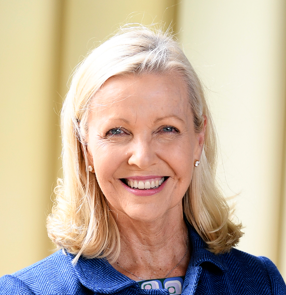
Emeritus Professor Donna Cross OAM
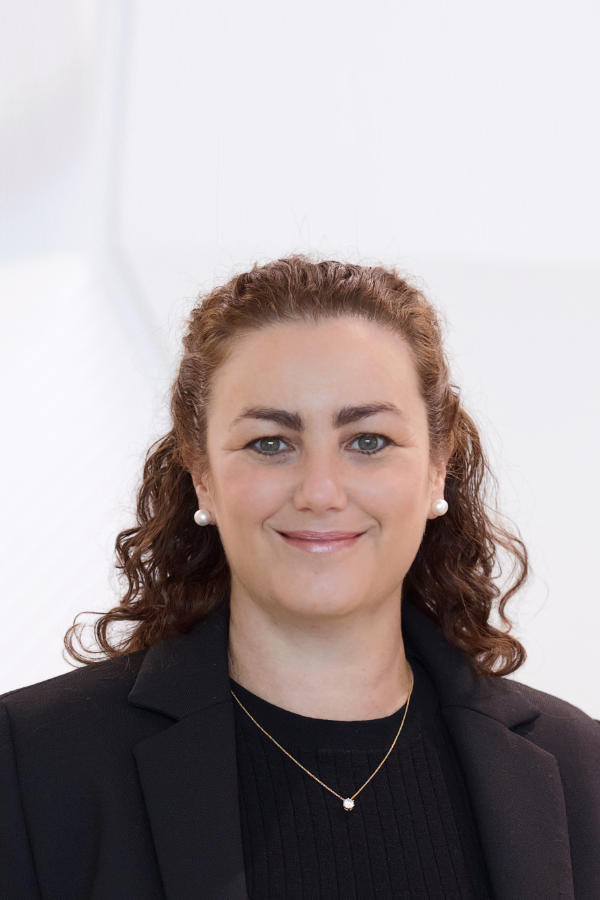
Dr Natasha Pearce
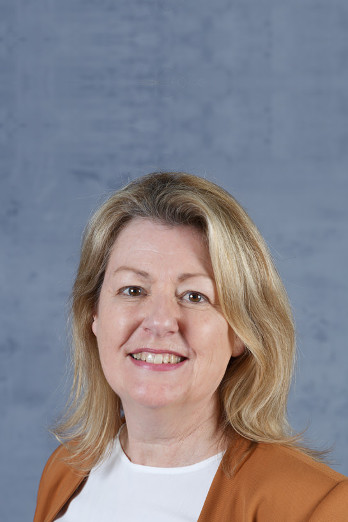
Erin Erceg

Dr Kevin Runions
Twenty-five years of school-based bullying research, distilled into one implementation framework.
Since 1999, the Friendly Schools team at The Kids Research Institute Australia, led by Professor Donna Cross, has led 23 school- and community-based studies with more than 40,000 Australian children, families and educators. Each project below links to its published summary.
Building the Australian evidence base.
From 1999 to 2008, across seven studies, the team established the first Australian evidence for whole-school approaches to bullying prevention — including testing interventions in primary and secondary schools and with families; with early childhood educators; and co-design with Yamaji Aboriginal leaders as well as Australia’s first national prevalence study.
Bullying moves online.
From 2008 to 2017, the research focus extended to digital environments. Eight projects across primary and secondary schools tested cyber-specific whole-school programs, indicated interventions, image-sharing education, and student-led peer leadership models.
From efficacy to implementation.
With the evidence base established, the focus shifted to implementation science: how to support schools to adopt, sustain and scale what works. Apps were developed for parents, and research focused on equity, system-level pilots and the synthesis school-support implementation framework now known as OASIS.
Publications
- Nielsen, L., Shaw, T., Meilstrup, C., Koushede, V., Bendtsen, P., Rasmussen, M., Lester, L., Due, P., Cross, D. 2017. School transition and mental health among adolescents: A comparative study of school systems in Denmark and Australia. International Journal of Educational Research, 83:65-74. Doi: 10.1016/j.ijer.2017.01.011
- Cross, D., Monks, H., Hall, M., Shaw, T., Pintabona, Y., Erceg, E., Hamilton, G., Roberts, C., Waters, S., & Lester, L. 2011. Three-year results of the Friendly Schools whole-of-school intervention on children’s bullying behaviour. British Educational Research Journal, 37(1):105-129. Doi: 10.1080/01411920903420024
- Burns, S., Cross, D., Maycock, B. 2010. “That could be me squishing chips on someone’s car”: How friends can positively influence bullying behaviours. Journal of Primary Prevention, 31(4):209-222. Doi: 10.1007/s10935-010-0218-4
- Burns, S, Maycock, B., Cross, D., Brown, G. 2008. The Power of peers: why some students bully others to conform. Qualitative Health Research, 18:1704-1716. Doi: 10.1177/1049732308325865
- Burns, S., Maycock, B., Cross, D., Brown, G. 2008. ‘Woodpushers are gay’: The role of provocation in bullying. International Journal of Mental Health Promotion. 10(4): 40-49. Doi: 10.1080/14623730.2008.9721775
- Burns, S, Cross, D., Alfonso, H, Maycock, B. 2008. Predictors of bullying among 11–12-year-old school students in Australia. Advances in School Mental Health Promotion, 1 (2):49-60.
Publications
- Lester, L., Pearce, N., Waters, S., Barnes, A., Beatty, S., Cross, D. 2017. Family Involvement in a Whole-School Bullying Intervention: Mothers’ and Fathers’ Communication and Influence with Children. Journal of Child Family Studies, 26(10): 2716-27. Doi: 10.1007/s10826-017-0793-6
Publications & links
- Coffin, J. 2010. Conceptualising bullying in an Aboriginal context as reported by the Yamaji community, to inform the development of a bullying prevention program that is culturally sensitive to the needs of Aboriginal students. PhD thesis, Edith Cowan University.
- Solid Kids website: Home · We All Solid · Bullying
Publications
- Cardoso, P., Thomas, L., Johnston, R., and Cross, D. 2012. Encouraging student access to and use of pastoral care services in schools. Australian Journal of Guidance and Counselling. 22(2):227-248. Doi: 10.1017/jgc.2012.28
Publications
- Spears, B.A., Campbell, M., Tangen, D., Slee, P., Cross, D. 2015. Australian pre-service teachers’ knowledge and understanding of cyber-bullying: Implications for school climate. Les dossiers des Sciences de l’Education, 33:109-130.
Publications
- Spears, B.A., Campbell, M., Tangen, D., Slee, P., Cross, D. 2015. Australian pre-service teachers’ knowledge and understanding of cyber-bullying: Implications for school climate. Les dossiers des Sciences de l’Education, 33:109-130.
Publications
- Rapee, R., Shaw, T. Hunt, C., Bussey, K., Hudson, J.L., Mihalopoulos, C., Roberts, C, Fitzpatrick, S., Radom, N., Cordin, T., Epstein, M., Cross, D. 2020. Combining whole-of-school and targeted programs for the reduction of victimization: A randomized, effectiveness trial. Aggressive Behaviour. 46: 193-209. Doi: 10.1002/ab.21881
- Le, L.K., Chatterton, M.L., Rapee, R., Fitzpatrick, S, Bussey, K., Hudson, J., Hunt, C., Cross, D., Magnus, A., Mihalopoulos, C. 2021. Burden and Preference-based Quality of Life Associated with Bullying in Children. European Child and Adolescent Psychiatry. Doi: 10.1007/s00787-021-01807-5
- Rapee, R.M., Bussey, K., Cross, D., Fitzpatrick, S. 2026. Longitudinal relationships between social anxiety, peer victimisation, and perceived support among children. Behavioral Sciences
Publications & links
- Kishida, Y., Shaw, T., Brennan-Jones, C., Vithiatharan, R., Hancock, K., Runions, K., Brown, M., Eikelboom, R., Coffin, J., Kickett-Tucker, C., Li, I., Epstein, M., Rahamathulla, M., Falconer, S., Cross, D. 2024. Supporting the Social-Emotional Wellbeing of Primary School Students who are Deaf or Hard-of-Hearing: A Pilot Study. Language, Speech and Hearing Services in Schools. Accepted for publication
- Patterson, L., Epstein, M., Vithiatharan, R., Cross, D. Belong (Social and Emotional wellbeing for students who are deaf or hard of hearing) Website
- Furness, E., Li I., Patterson, L., Brennan-Jones, C., Eikelboom, R., Cross, D., Fisher, C. 2019. A Qualitative Exploration of the Role and Needs of Classroom Teachers in Supporting the Mental Health and Well Being of Deaf and Hard of Hearing Children. Language, Speech, and Hearing Services in Schools, 50(3), 399-415. Doi: 10.1044/2019_LSHSS-18-0085
Links
- Download the papers — Cyber Friendly Primary Schools
Links
Title
Description
Four findings educators can take to their board
Evidence drawn from peer-reviewed Friendly Schools trials and other robust research.
Social and Emotional Learning Works
Meta-analysis of 213 school-based SEL programmes involving 270,034 K–12 students.
Friendly Schools whole-school approach works
RCT across 20 independent WA schools (10 intervention, 10 control).
Original Friendly Schools research: a world-first cyberbullying trial
3,000+ students across 35 secondary schools. Significant reductions in cyber-victimisation and cyber-perpetration even when teachers implemented only one-third of the programme.
Honest Accountability
Picking an evidence-based programme matters. Most wellbeing initiatives don’t show measurable impact in rigorous trials.
Two structures that anchor every Friendly Schools resource
The research supported two organising frameworks: the five Social and Emotional Learning skills (CASEL model, aligned with the 4 personal and social capabilities in the Australian Curriculum) and the eight Whole-School Components for Action (aligned with the WHO Health Promoting Schools; used in the Map-the-Gap review tool).
Five SEL skill areas
- 1Self-awareness. Recognising and understanding our feelings, while valuing our strengths and abilities.
- 2Self-management. Controlling and directing our emotions in appropriate ways.
- 3Social awareness. Being aware and respectful of the feelings and perspectives of others.
- 4Relationship skills. Dealing positively with relationship problems and social conflicts.
- 5Social decision-making. Considering consequences and making thoughtful, sensible decisions.
Eight Whole-School Components for Action
- 1School connectedness & climate
- 2Consistent understandings and procedures
- 3Physical environment
- 4Social environment and breaktimes
- 5Classroom teaching and practice
- 6Positive behaviour and wellbeing support
- 7Student voice and peer support
- 8School and family community partnerships
The Friendly Schools Logic Model
The full logic/impact pathway: inputs, activities, and outcomes across short, medium, and long-term. This is the evaluation framework schools and researchers use to measure whether a Friendly Schools implementation is positively affecting student wellbeing.
- Whole-school leadership team
- K–Year 9 teaching staff time
- Family & community partnership
- Evidence-for-Practice resources
- Term-by-term scheduling
- Practice review & gap mapping
- Eight whole-school components
- Classroom SEL lessons
- Student voice & peer support
- Parent partnership activities
- Improved SEL skills
- Reduced victimisation and distress
- Stronger school connectedness
- Consistent staff response
- Sustained wellbeing gains
- Academic achievement uplift
- Reduced adolescent anxiety
- Positive adult relationships
- Whole-community culture shift
Friendly Schools Logic Model and Impact Pathway (November 2022). Developed at The Kids Research Institute Australia.
Friendly Schools, the Rapid Review and the NSW Anti-Bullying Framework
Federal · the Anti-Bullying Rapid Review, 2025
The federal Anti-Bullying Rapid Review was delivered in 2025. It sets the national direction for how Australian schools prevent and respond to bullying.
NSW · the Anti-Bullying Framework
The NSW Anti-Bullying Framework is how NSW is operationalising the Rapid Review’s requirements. NSW schools must have an anti-bullying policy in line with the national framework by Term 1, 2027. No other state or territory has yet published how it intends to respond.
The NSW framework’s four components, Responding, Preventing, Implementing and Partnering, draw on the same body of evidence that has shaped Friendly Schools since 1999.
Where Friendly Schools sits
Schools using Friendly Schools therefore are well positioned to meet the NSW framework’s requirements through the program’s existing whole-school architecture.
Friendly Schools is the most directly-aligned whole-school programme available: the components, implementation stages, and tools were developed through the same research lineage. Schools using Friendly Schools are meeting the NSW framework’s requirements by construction.
Types of bullying our program addresses

Cyber Bullying
Through digital devices, social media, and online platforms. Affects 38% of Australian 10–17 year olds in a given 12 months.
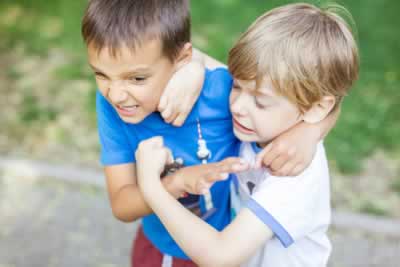
Physical Bullying
Hitting, pushing, damaging belongings, or physical intimidation. The most commonly reported form, especially among primary-aged boys.

Emotional Bullying
Name-calling, insults, threats, and humiliation. The most prevalent form across all year levels and genders in Australian schools.
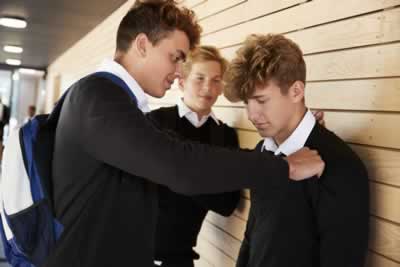
Social Exclusion
Leaving someone out, spreading rumours, or manipulating social groups. The form most strongly linked to long-term mental health impact.
Three Australian research institutions. One continuous programme.
Friendly Schools was developed with Curtin University of Technology (1999–2002), Edith Cowan University (2002–2012) and The Kids Research Institute Australia (2014–present).



Ready to bring Friendly Schools to your school?
Start with a review of where your school is now, or browse the classroom resources that help to put this research into practice.
Evidence-based wellbeing for Australian schools. Built on 25+ years of research at The Kids Research Institute Australia.
Friendly Schools acknowledges the Whadjuk Noongar people as the traditional custodians of the land on which our work began, and pays respect to Elders past and present.