
Supporting your child's social and emotional wellbeing
Plain-language advice on bullying, friendships, and online safety — grounded in 25+ years of Friendly Schools research.
Recognise it before you can respond to it
What bullying is, the seven forms it takes, and the warning signs to watch for.
What bullying is — and what it isn't
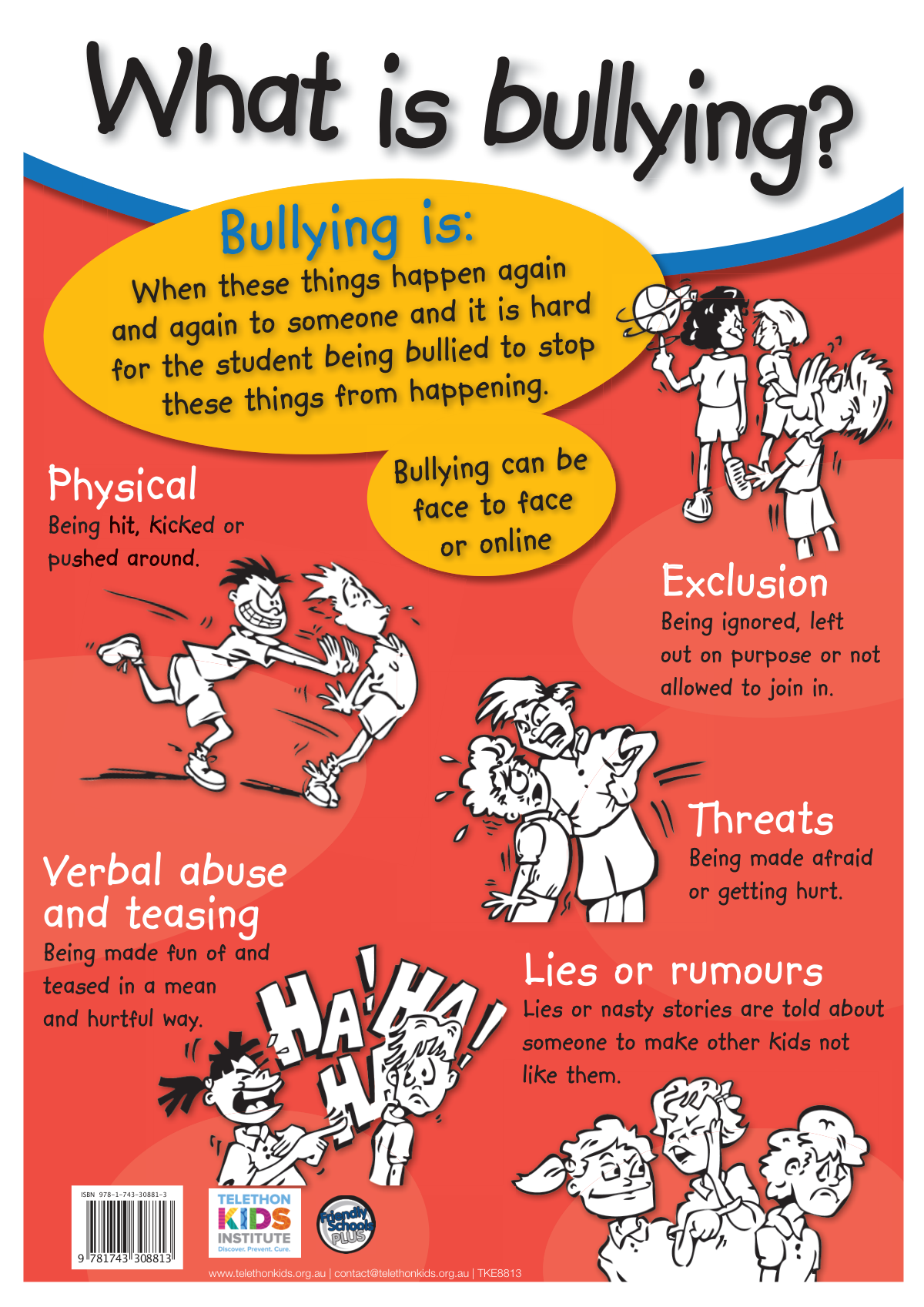
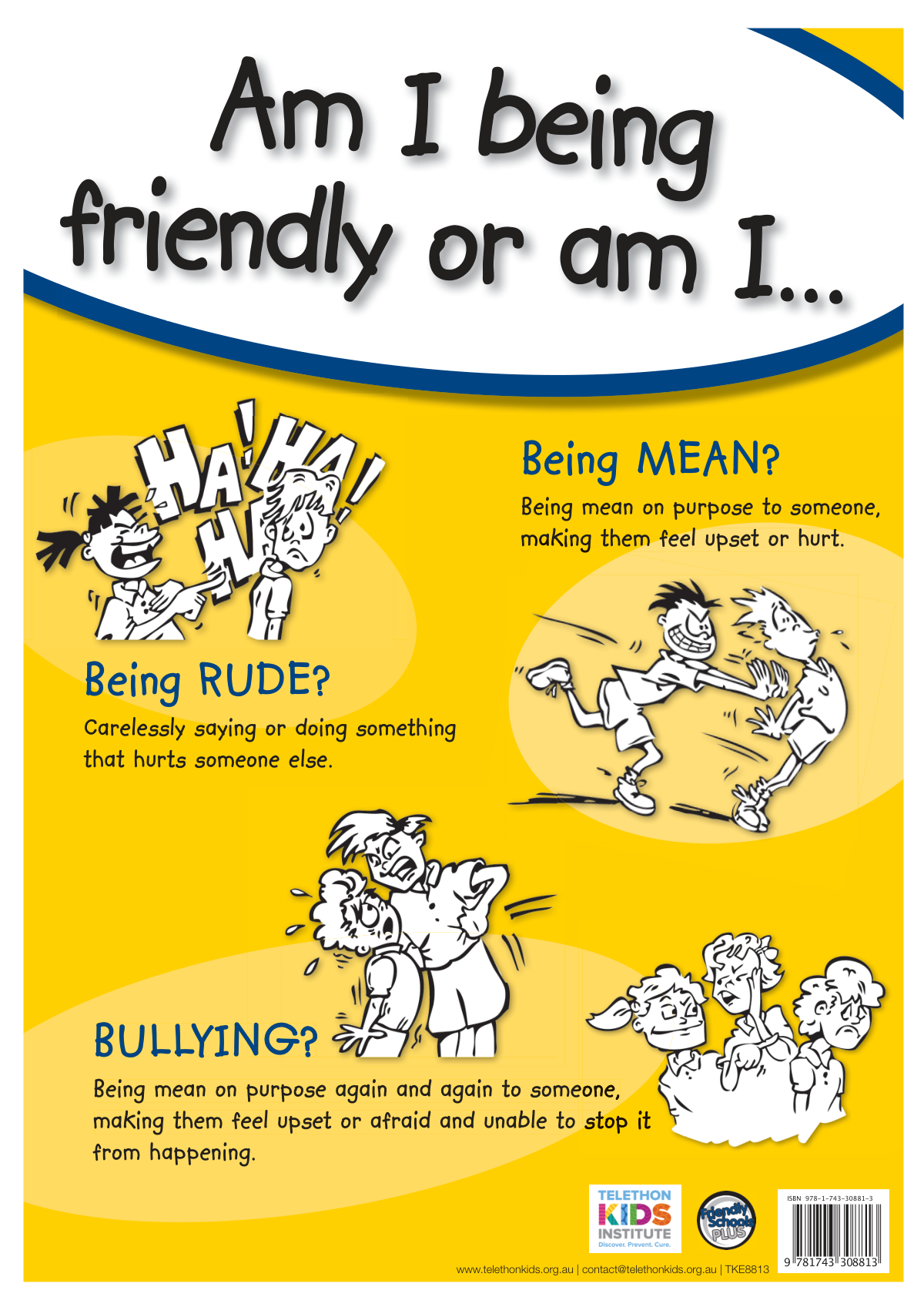
The word "bullying" gets used for lots of things that aren't bullying. Unfriendly or aggressive one-off behaviour can be serious, but requires a different response. Understanding the difference helps you support your child.
🔎 Bullying is defined by four things
Bullying is repeated behaviour — physical, verbal, and/or psychological — where there is intent to cause fear, distress, or harm to another. It's conducted by a more powerful person or group against a less powerful person who is unable to stop it.
- Repeated: it keeps happening again and again
- Intent: the person does it on purpose
- Power imbalance: the target cannot easily defend themselves
- Hard to stop: the person being bullied feels trapped
📱 Cyberbullying is different
Cyberbullying is when an individual or group repeatedly uses technology to cause fear, distress, or harm to another person who finds it hard to stop. It happens via messages, pictures, video clips or emails — sent directly, to others, or posted publicly.
- Can occur 24/7 and be difficult to escape
- Invasive — reaches your child even at home
- Attackers often feel anonymous
- Audience can be large and the content permanent
- Children are less likely to tell someone they're being cyberbullied
The seven behaviours to watch for
Bullying takes many forms. Recognising each type helps children and adults name what's happening — the first step toward stopping it.
Verbal bullying
Cruel teasing, name-calling, or being made fun of in a hurtful way.
Cyberbullying
Mean or hurtful messages sent on the internet or via mobile phone.
Property abuse
Having belongings or money broken, stolen, or taken away.
Exclusion
Being deliberately left out or not allowed to join in with a group.
Emotional bullying
Lies or nasty rumours spread to turn others against the person.
Physical bullying
Being hit, kicked, punched, or pushed around.
Threatening
Being made afraid of getting hurt, embarrassed, or upset.
What you can do
Name the behaviour with your child. Open the conversation early, so they feel safe telling you later. See other ideas described in the LATE model below.
How to talk with your child — either way
The LATE model. Seven concrete steps for cyberbullying. And what to do if your child is the one bullying others.
How to respond when your child tells you
Researched by Friendly Schools researchers and parents, the LATE model is a practical framework you can use when your child is being bullied — or is bullying others.
React in a calm and supportive manner. It's important your child feels confident and safe talking with you.
Acknowledge that bullying is wrong and that you understand they may be upset by what is happening.
Ask what you could do to help. Discuss options and work out a plan to make the situation better.
Remind them the bullying is not their fault and that you'll work together to make things better.
🚨 Signs your child may be bullied
Many children show these signs at times — but watch for them appearing together or persisting.
- Reluctance to go to school or increased absences
- Frequent complaints of headaches or stomach aches
- Appearing unhappy, moody, or irritable
- Wanting to be taken a different route to school
- Frequent damage or loss of clothes, property, or schoolwork
- Frequent injuries such as bruises or cuts
- Withdrawal and a reluctance to say why
- Difficulty sleeping, bed-wetting, nightmares
- Coming home hungry, money going missing
- Having no friend to share free time with
📺 Signs of cyberbullying
Harder to spot — and older children are less likely to tell you. Monitor online activity and keep conversations open.
- Upset after using the internet or their phone
- Appearing lonelier, withdrawn, anxious, sad, or angry
- Unexpected changes in friendship groups
- Trouble sleeping
- Avoidance of school or previously enjoyed activities
- Becoming secretive about online and phone use
Seven steps to take — in order
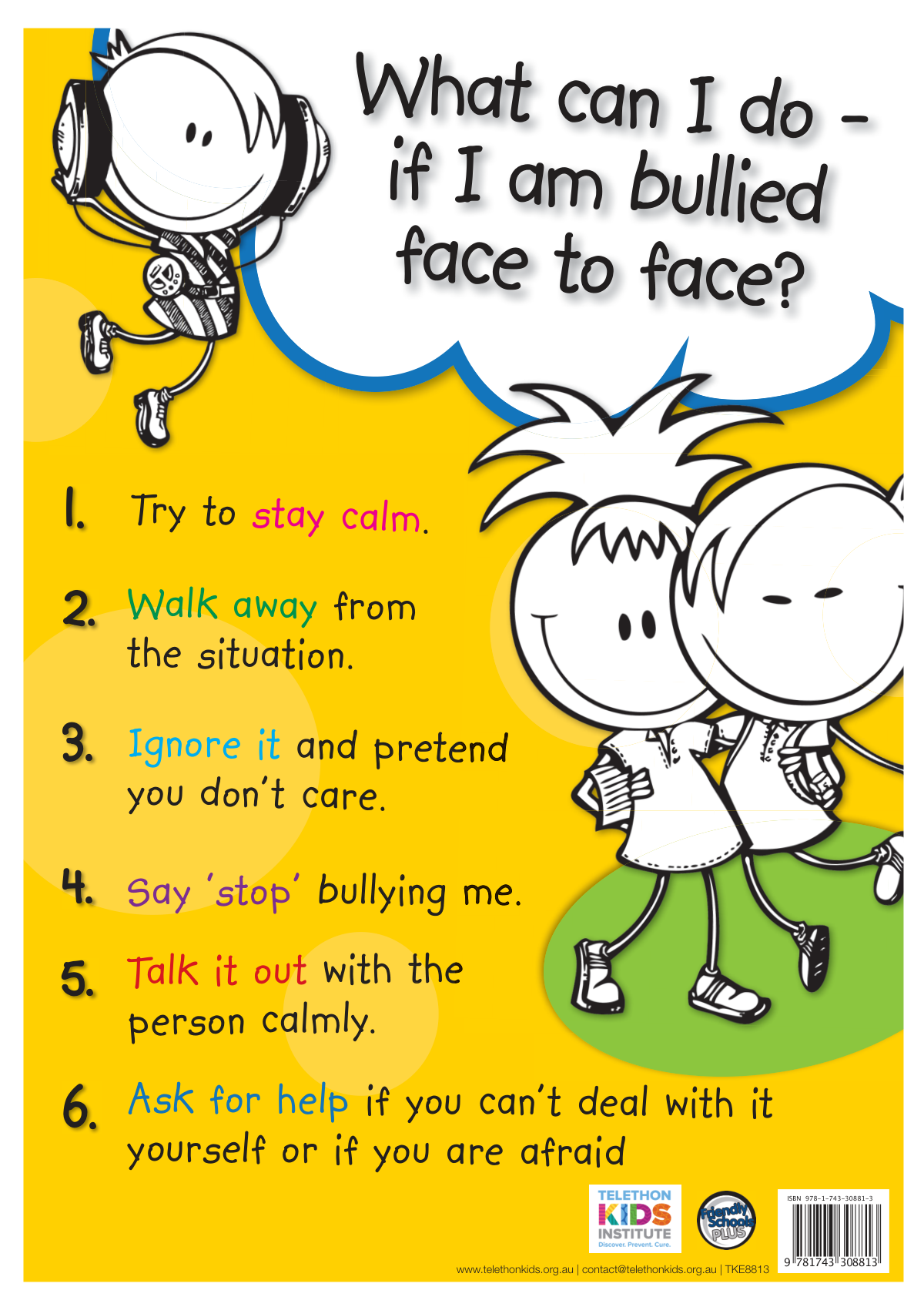
The following are immediate actions you can work through together.
Don't respond
Responding gives the person bullying attention and can make the situation worse. Stop the dialogue first.
Save the evidence
Screenshot messages, posts, images, or emails. Parents/carers keep a dated record — don't delete anything before capturing it.
Block the person
Block them on every platform where the bullying is happening. Review privacy settings and set profiles to private.
Keep a diary
Log what is happening and when. This record helps the school — and, if needed, the police.
Report to the platform
Use the platform's report function to have content removed. Most services have a clear reporting path.
Tell the school
Even if it's happening at home, the bullying usually sits inside your child's peer group. The school can support.
Escalate if it continues
Report serious or ongoing cyberbullying to the eSafety Commissioner. If there's a threat of violence, contact police.
Any child can find themselves there
As they learn social and emotional skills, children make mistakes. They may also copy behaviours they see working for others. The LATE model works here too — applied calmly, and with clear consequences.
Find a quiet place or go for a walk with just you and your child. Start with a question, calmly and openly: "I've heard you've been involved in some issues with another child at school…" Then use LATE:
Listen — react calmly so your child feels confident to talk. Acknowledge — that bullying is wrong and has consequences, and that there's a reason they used this behaviour. Talk about options — ask what they could do to resolve it. Set a time plan. End with encouragement — you'll support this change together, and check in to make sure it's happening.
Raise your children to help others who may be bullied. Partner with the school.
How children who witness bullying can shift the dynamic, and the practical pathway for escalating with your school when you need to.
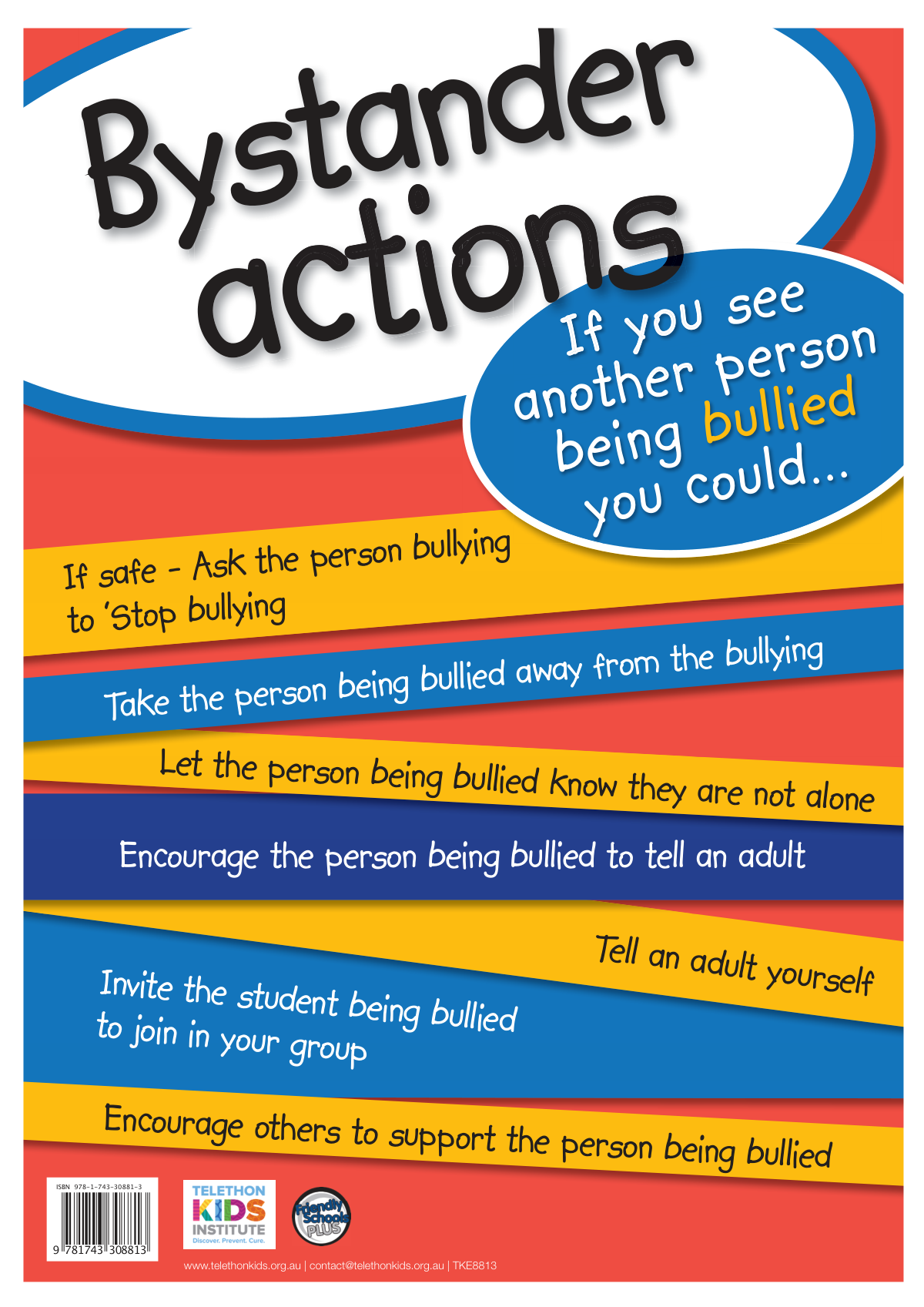
Children who witness bullying feel it too
Evidence shows children who witness bullying can display similar anxiety levels to the child being bullied. Being someone who helps students who may be bullied means refusing to support the person bullying.
What helpers can do
- Let the person bullying know their behaviour is not okay (do this with friends if safer)
- Shift the focus — ask the target to come with you, or take your friends elsewhere
- Tell the target you don't like what's happening and want to help
- Take the target away from the situation — removing the audience removes the power
- Encourage others to support the person being bullied (safety in numbers)
- Invite them into your group — children who are alone are more often targeted
- Tell a teacher, parent, or support person — the target needs help
Always ask your child to consider safety first
If they don't feel safe stepping in, asking for help is helping. The thing that matters is doing something.
The escalation pathway
Your child's wellbeing is a partnership between you and the school. This is the path most families find effective — step by step, keeping records at each stage.
Talk with your child first
Ask what they've tried, what they would like to see happen, and how they would like the school involved. This respects their agency.
Email the teacher
Write an email outlining your concerns and send any evidence. Request an appointment for you and your child to meet the teacher.
Agree on a plan
Agree strategies to implement at school and home. Set a follow-up date. Discuss with your child.
Escalate to the Principal
If bullying continues, email the Principal requesting an appointment. Bring your diary and compare with the school's records.
Report to police and eSafety
If your child is hurt, threatened with violence, or sexually harassed, report to police. For cyberbullying, use the eSafety Commissioner reporting form.
Your voice belongs in the loop — that’s what iyarn does
Friendly Schools’ digital platform runs on iyarn — a check-in tool that captures family, student and staff voices each week, and sends the patterns to your school’s wellbeing leaders. Ask your school if they use it. If they do, your input shapes what they prioritise next.
Family Activity Packs
Free sample packs you can read with your family. Each sample is a preview — full versions, with the complete Family Activity Sheets, come with your school’s Friendly Schools resources — ask your school about them.
Introduction to Family Sheets
An overview of how Family Sheets work and how to use them with your child.
Primary Pack 1 — Communication
Starting conversations with your child about friendships and feelings.
Secondary Pack 1 — Transition
Making the move into secondary school — what to watch for, what to talk about.
Secondary Pack 2 — Communication
Keeping the lines of communication open with adolescents.
Secondary Pack 3 — Parenting Adolescents
Staying connected and supportive as your teen grows.
Secondary Pack 4 — Friendships
Social skills, friendships, and managing peer influence.
Secondary Pack 5 — Resilience
Building resilience, self-esteem, and optimistic thinking.
Australian services for your child — and for you
Free, confidential, Australian. Phone, web chat, and online reporting. Bookmark this section.
Support services for parents and carers
Every service below is free, confidential, and Australian. Some are for your child to call directly; others are for you. In an emergency, always call 000 first.
Kids Helpline (for your child)
Free, confidential 24/7 counselling for anyone aged 5-25. They’ll talk to your child about bullying, friendships, family, anything.
kidshelpline.com.au →Parentline (state-based)
Free phone counselling for parents and carers. Each state runs its own service — pick yours above, or search the directory below.
All Parentline numbers →Lifeline
Free, confidential 24/7 crisis support for anyone. For when things are at a crisis point — yours or your child’s.
lifeline.org.au →eSafety Commissioner
Official Australian body. Can get serious cyberbullying content taken down from social media and search engines. Online reporting form.
esafety.gov.au/parents →headspace (ages 12–25)
Mental health support for young people. Free phone, online chat, and in-person centres around the country. For your child’s anxiety, mood, identity, or family stress.
headspace.org.au →Want your child’s school on this same page?
Forward Friendly Schools to your school’s wellbeing lead. For $20 they can run Map the Gap, see exactly where their wellbeing program is strong and where the gaps are, and download a leadership-ready report the same day — no sales call, no onboarding wait.
Send your school the $20 starter Self-serve · 30-day platform access · backed by 25+ years of Australian research
Evidence-based wellbeing for Australian schools. Built on 25+ years of research at The Kids Research Institute Australia.
Friendly Schools acknowledges the Whadjuk Noongar people as the traditional custodians of the land on which our work began, and pays respect to Elders past and present.


Schools and families working together
A child's social and emotional wellbeing is a vital part of their overall health, development and wellbeing. Children with strong social and emotional skills are more likely to cope with physical, intellectual and social challenges during childhood and adolescence — and lead a positive and fulfilling life.
As parents and carers, you are the first teachers in helping your children develop these skills. You can teach and model the kinds of behaviours your children need to master, and you are important advocates for the social and emotional learning that happens at school.
Friendly Schools research has shown that schools' efforts to change attitudes and behaviour are far more likely to succeed when parents/carers are actively involved and feel a sense of shared ownership.